
Thirteen companies have joined the Rs 1-trillion-plus market capitalisation club this year, so far. This even as the benchmark Sensex has gained less than 3 per cent on a year-to-date basis, underscoring the bullish undercurrent in the broader market. The trend shows a harsh second wave of Covid-19, subsequent lockdowns, and hit to the economic activity has made little dent into India Inc or shareholders' wealth. At the start of the year, there were 29 companies with a market value of more than Rs 1 trillion.

India is expected to grow at 7.8 per cent in 2015, surpassing China's growth rate.
The fourth consecutive rate cut is expected to lower equated monthly instalments (EMIs) for home and auto buyers, and borrowing cost for corporate.
Ahead of the Economic Survey, industry body Ficci today lowered its GDP growth forecast for the current fiscal, pegging India's economic expansion rate at 5.3 per cent compared to its 5.5 per cent previous estimate.

Indian economy grew 7.9 per cent in the March quarter.

These sweeping financial sanctions follow the action earlier this week to cut off Russia's frozen funds in the United States to make debt payments.

While India's GDP is pegged at 7.7%, China is projected to grow at 7%.

Other gainers included SBI, Kotak Bank, Sun Pharma, Tata Motors, M&M and Tata Steel, rising up to 5.19 per cent.

India will catch up with China's growth at 7 per cent during 2016-17, the World Bank has forecast, saying India's economy has recovered in the wake of the economic reform measures taken by the new Indian government, falling oil prices and lower interest rates.

The country's economy is expected to grow by around 6 per cent in the current fiscal, even in the worst-case scenario of global recession prevailing till March 2010, according to Arvind Virmani, chief economic adviser in the Ministry of Finance.

The government kept its nerve in the face of a massive shock. It chose not to resort to a massive fiscal stimulus. It focused instead on providing liquidity support and easing restrictions on movement in stages, observes T T Ram Mohan.

'The recovery process for the Indian economy would be gradual'.

Rating agency ICRA on Wednesday revised down its credit growth outlook for banks to 2-3 per cent for the current fiscal, and said the coronavirus pandemic-driven stress may leave 3.1-3.7 per cent of assets into bad loan list by March.

The global rating agency expects the economy to pick up in the next two financial years.

Encouraged by improvement in corporate earnings and decent monsoon forecasts, Citigroup has raised its BSE Sensex target to 28,800 for the fiscal year ending March 2017.

The Budget is remarkably coherent.
Bank of America Securities-Merrill Lynch raised its growth forecast to 6.3 per cent from 5.3 per cent for the current fiscal. BAS-ML has also revised the country's growth projection to 7.3 per cent for the next fiscal from 7.1 per cent earlier.

Twelve of the 21 economists polled doubted whether the government could roll out the tax before the next fiscal year begins in April.

Fitch had last upgraded India's sovereign rating from BB+ to BBB- with a stable outlook on August 1, 2006.
The Bank suggested reforms in infrastructure sector.

A likely easing in inflationary pressures in the forthcoming months will reopen the window for the RBI to once again prioritise growth and ease its interest rates.
The finance minister should attempt to quickly get back to a path of fiscal consolidation.
Softening inflation, Das said would make available more policy space to the central bank to address risks to the growth going forward.

China's economy, which suffered 6.8 per cent slump in the first quarter due to the coronavirus pandemic -- the worst in 44 years -- bounced back posting 4.9 per cent growth between July and September buoyed by the government's sweeping efforts to stimulate demand and consumption.

NTPC was the top gainer, spurting 4.28 per cent. Other winners were Bajaj Auto, Bajaj Finance, Sun Pharma, ITC, Hero MotoCorp, TCS, Yes Bank, HDFC, HDFC Bank and SBI, rising up to 1.38 per cent.
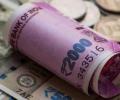
For the first time, the value of card and mobile payments of Rs 10.57 trillion was more than ATM withdrawals of Rs 9.12 trillion in Q4 of fiscal 2019-20. In the months of lockdown, the gap may have widened further, but cash could be back in vogue when the situation normalises.

'This market is very expensive in some pockets, dirt cheap in some, and the belly of the market is reasonably valued.'

While asserting that the growth of coronavirus cases in the country has been more or less linear and not exponential, it also said testing has been ramped up consistently.
Markets trimmed early gains to end marginally higher on Friday as investors turned cautious ahead of the GDP data for the current fiscal to be released on Friday.
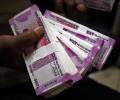
Without accounting for refunds, however, the collection contracted 5.4 per cent, indicating muted economic activity as the Covid-19 pandemic and subsequent curbs paralysed most sectors.
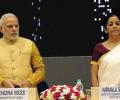
Prime Minister Narendra Modi on Thursday reviewed the impact of Covid-19 on the Indian economy and a possible second stimulus to boost sectors hit hard by the pandemic. Modi held discussions with Finance Minister Nirmala Sitharaman as the pandemic hit sectors from small industries to the aviation sector hard with millions of jobs at stake.
Economic think-tank NCAER on Wednesday warned that lower agriculture growth would pull down average annual GDP growth to 6.7 per cent during 2002-07, as against the targeted 8.1 per cent

On the revenue front, the finance ministry was expecting higher proceeds from non-tax revenue.

Buoyed by an increase in public investment and incentives to boost manufacturing, India's economy is expected to grow by 8.3 per cent in the fiscal year 2021-22, less than the previous projection early this year before the country was hit by the second wave of the COVID-19 pandemic, the World Bank has said in its latest report. World Bank chief economist for the South Asia Region Hans Timmer told PTI here that when one looks at the high frequency data, they see that as a result of the second wave of the COVID-19 pandemic, the recovery paused, and some indicate that the recovery actually declined briefly. "We project for this fiscal year 8.3 per cent (growth rate for Indian economy) that is less than we projected early in the year before the health crisis caused by the second wave. "Given the sharp contraction of the economy last year, it might not look like a lot, but in my view, that is actually very positive news, given the violent second wave and the severity of the health crisis," he said on Thursday.

"The theme of tomorrow's meeting is 'Economic Policy Reform, Road Ahead'. The prime minister will make opening remarks. There are 15 invitees who will make their presentations before the prime minister," a senior government official said.

'While we note the very strong cyclical recovery in the economy, we believe there is still uncertainty over medium-term prospects.'

Manufacturers said they expect the growth of manufacturing sector to be less than 7 per cent.

On Thursday, the UN pegged the calender 2013 growth at 6.4 per cent, while the ADB last projected that the domestic economy would reach 6 per cent in the current fiscal.

India's fortunes will start reviving by 2018 when it will be at the ninth position, followed by fourth in 2023, before grabbing the third spot in 2028.

Stating that India's consolidated deficit is the highest among the G20 nations, Gopinath added it is important for India to undertake reforms.
